 Menu
An interesting term came up in a conversation this week: "asset-right."
It got me thinking about a question that will become increasingly important as transport electrifies.
Who should own and pay for the charging infrastructure?
Consider a logistics property. The tenant wants to electrify its fleet but has only five years remaining on its lease. The landlord owns the building. The transport business gets the benefit of running electric vehicles, while much of the electrical infrastructure could remain useful long after the tenant leaves.


Should the landlord pay? Should the transport business make the investment? Or could a specialist charging provider fund the equipment and recover its costs through a service agreement?
Each has a reasonable argument. Yet none necessarily wants to carry the full investment.
And that's where projects can become difficult. The infrastructure may sit at the property, but its value is spread across several businesses, each working to a different commercial timetable.
The answer, I think, starts with looking at the infrastructure differently.
One installation. Different business cases.
A charging installation isn't really one asset.
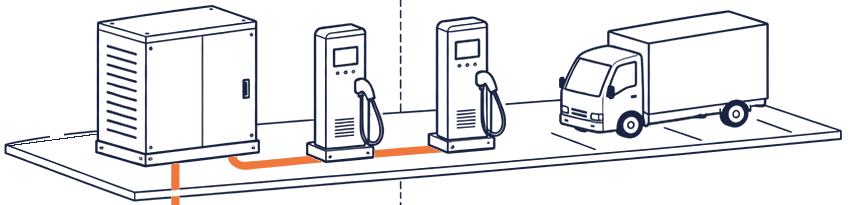
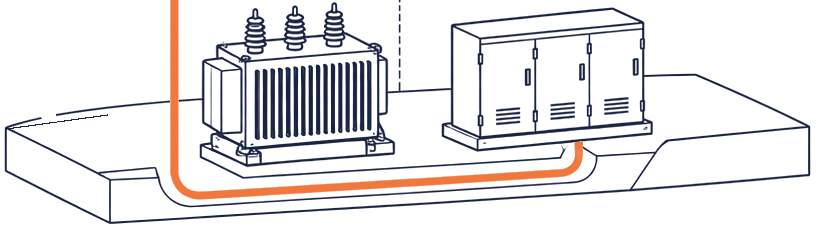
It can include transformers, switchgear, electrical distribution, charging equipment and the software and services needed to keep everything running.
Some of that infrastructure may have lasting value to the property. Other parts depend heavily on the vehicles that use them.
The landlord might see an investment that makes the building more attractive to future tenants. The transport company sees an opportunity to operate electric vehicles at a competitive cost. A charging provider sees an asset that needs sufficient revenue to recover its capital and operating costs.
All three could be looking at the same installation and arrive at different conclusions.




There is also a more basic question worth asking before anyone invests.
Does the business actually need dedicated chargers at this location?
A fleet needs reliable access to charging. Depending on its routes and operating schedule, that might come from its own depot, shared infrastructure or a nearby charging hub.
The answer matters because it changes how much infrastructure is needed, when it is needed and whether the investment makes sense.
There may be a good reason to invest early, especially where grid connections have long lead times. But building ahead of demand also carries a cost.
The decision should begin with the transport operation and work backwards to the infrastructure required.
A forecast is not a contract
Let's put some numbers around the problem.
Imagine a hypothetical logistics site where the tenant plans to introduce four electric vehicles, with ambitions to grow to twenty over five years.
The proposed installation requires €400,000 of site electrical works and €240,000 of charging equipment.
That's €640,000 before ongoing operating costs.
The electrical works may serve future tenants. The chargers are more exposed to the current fleet's requirements and the speed at which it electrifies.
Now consider the €240,000 charging-equipment investment.
If it must be recovered over five years at an illustrative 8% annual required return, it needs approximately €60,100 a year in capital recovery.
Add €12,000 in fixed maintenance, software and monitoring costs, and the annual requirement reaches roughly €72,100, before electricity and variable operating costs.
Assume each vehicle requires 150 kWh of depot charging per operating day, across 300 days a year.
Four vehicles would consume around 180 MWh annually. Twenty would consume 900 MWh.
If the same installation could serve both fleets, the fixed annual cost spread over energy delivered would fall from approximately €0.40 per kWh to €0.08 per kWh.
These figures are illustrative and exclude the €400,000 electrical backbone. The larger fleet might also require additional equipment.
But they reveal the problem.
At twenty vehicles, the investment could look attractive. At four, the costs are much harder to spread across the charging demand.
And only four vehicles are committed today.

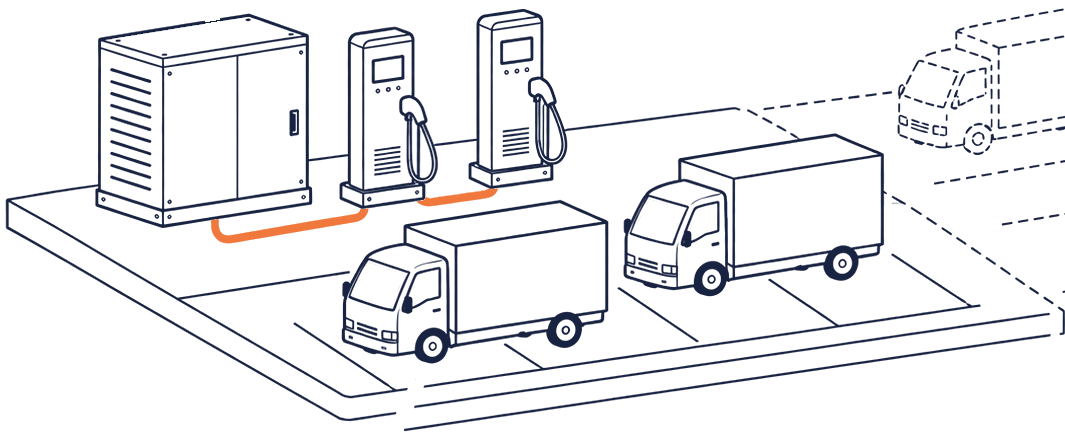
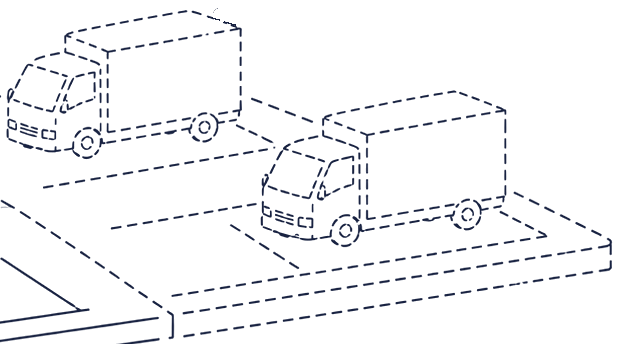


Schematic illustration. Fleet numbers and investment assumptions are explained in the article.
The other sixteen are a forecast.
Who takes the risk if they arrive two years late? Or if the fleet never reaches twenty?
It doesn't matter whether the landlord, transport company or charging provider owns the chargers. Somebody still has to recover the investment.
Moving the asset to another balance sheet doesn't change its utilisation.
That is why charging projects need more than a forecast of future electricity consumption. They need a credible route to revenue, a way to manage uncertain demand and contracts that reflect those risks.
The value of sharing
The investment case becomes more interesting when several businesses can use the same infrastructure.
Imagine three transport operations at one logistics site.
One charges overnight. Another needs its vehicles charged during the day. The third requires occasional access.
If their schedules complement one another, they may be able to share the same charging equipment and electrical capacity.
That could improve utilisation and reduce the investment required.
But if all three businesses need to charge at 05:00, the benefits of sharing may be limited.
This is where we need to distinguish between electricity consumed and charging capacity reserved.
A business that needs guaranteed access to a charger at a particular time creates a cost, even if it doesn't use all the electricity it expected.
That suggests a commercial model with separate charges for reserved capacity, electricity consumed and the services required to keep the system operating.
It also separates the question of who owns the infrastructure from which business should pay for using it.
The landlord could own the electrical backbone. A specialist could own or operate the chargers. The transport businesses could pay according to the capacity and services they require.
The arrangements would need to establish access rights, metering, operating responsibilities and what happens when a tenant leaves.
Those details matter. But they can be resolved within a commercial model rather than requiring one business to own everything.
So what would I actually do?
Let's return to our five-year lease.
I wouldn't start by asking the landlord to approve €640,000. I'd start with the four vehicles the transport business has committed to.
First, I would establish their charging requirements and compare the available options. Can the existing connection support them? Is there a suitable external charging service? What is the smallest reliable on-site solution?
Then I would look at the €400,000 electrical investment separately.
If the additional capacity has credible value beyond the current tenant, there may be a case for the landlord to invest. But that value needs to be demonstrated through the expected returns, not assumed because the infrastructure is attached to the building.
For the charging equipment, I would explore a service arrangement with a specialist provider. The transport business could commit to the capacity it needs today, giving the provider a basis for financing and operating the equipment.
The site could be designed to expand as fleet demand becomes more certain.
This approach would separate the long-term property investment from the fleet-specific charging service, while keeping both connected through a workable operating agreement.
It would also establish who pays if demand falls short, what happens when the lease ends and who is responsible when the equipment fails.
There are other ways to structure the investment. A landlord-funded installation or direct investment by the transport business might produce a better result under different circumstances.
The point is to compare those options against the same operating requirements and commercial assumptions.
And if none of them produces a viable return, I would revisit the size or timing of the investment rather than try to persuade another party to fund it.
The asset-right decision
The principle extends beyond charging.
Solar, batteries and other energy infrastructure installed at commercial properties raise similar questions. The physical asset, the operating benefit and the investment responsibility do not always sit with the same business.
For me, an asset-right decision comes down to four things.

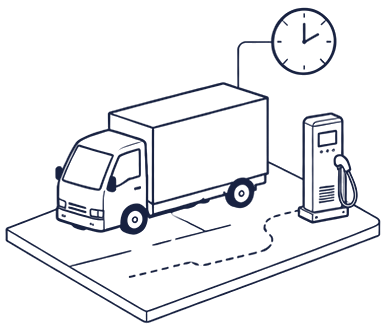 Understand the operationWhat is needed, and when?
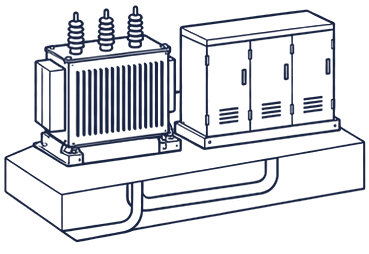 Identify lasting valueWhat stays useful?
 Prove the investmentHow will costs be recovered?
 Choose the structureWho funds, owns and operates?


Understand the operation. Establish what infrastructure is actually needed, when and why.
Identify the lasting value. Separate what benefits the property over time from what depends on a particular customer.
Prove the investment. Test how the capital will be recovered, including what happens if demand is delayed or the customer leaves.
Choose the structure. Allocate funding, ownership and operational responsibility to the parties best positioned to manage them.
The outcome might be landlord ownership, direct fleet investment, a charging service or a combination.
There is no single model that will work for every property.
But the order matters.
We should establish what makes the investment viable before deciding which business should carry it.
Asset-right is about making the right investment, then putting the asset, responsibility and risk in the right hands.
And sometimes, the best decision is recognising that the infrastructure doesn't need to be built at all.
The investment figures, fleet requirements and financial assumptions are hypothetical. The five-year capital recovery example assumes an 8% annual required return, equal end-of-year payments and no residual equipment value. It is intended to illustrate commercial principles, not a specific project's investment returns.